
Testosterone Replacement Therapy
FEELING LIKE YOURSELF AGAIN STARTS WITH UNDERSTANDING WHAT’S CHANGED.
Testosterone plays an important role in sexual health, energy, muscle mass and strength, bone health, mood and overall wellbeing. Testosterone levels can decline for a variety of reasons, and for some men, low testosterone can have a significant impact on how they feel and function.
Testosterone Replacement Therapy (TRT) is a medically supervised treatment for men who have symptoms consistent with testosterone deficiency together with appropriately confirmed low testosterone levels.
The goal is not simply to “boost” testosterone. It is to understand why you are experiencing symptoms, determine whether testosterone deficiency is contributing, and develop a safe, individualized treatment plan when appropriate.
Could Low Testosterone Be Affecting You?
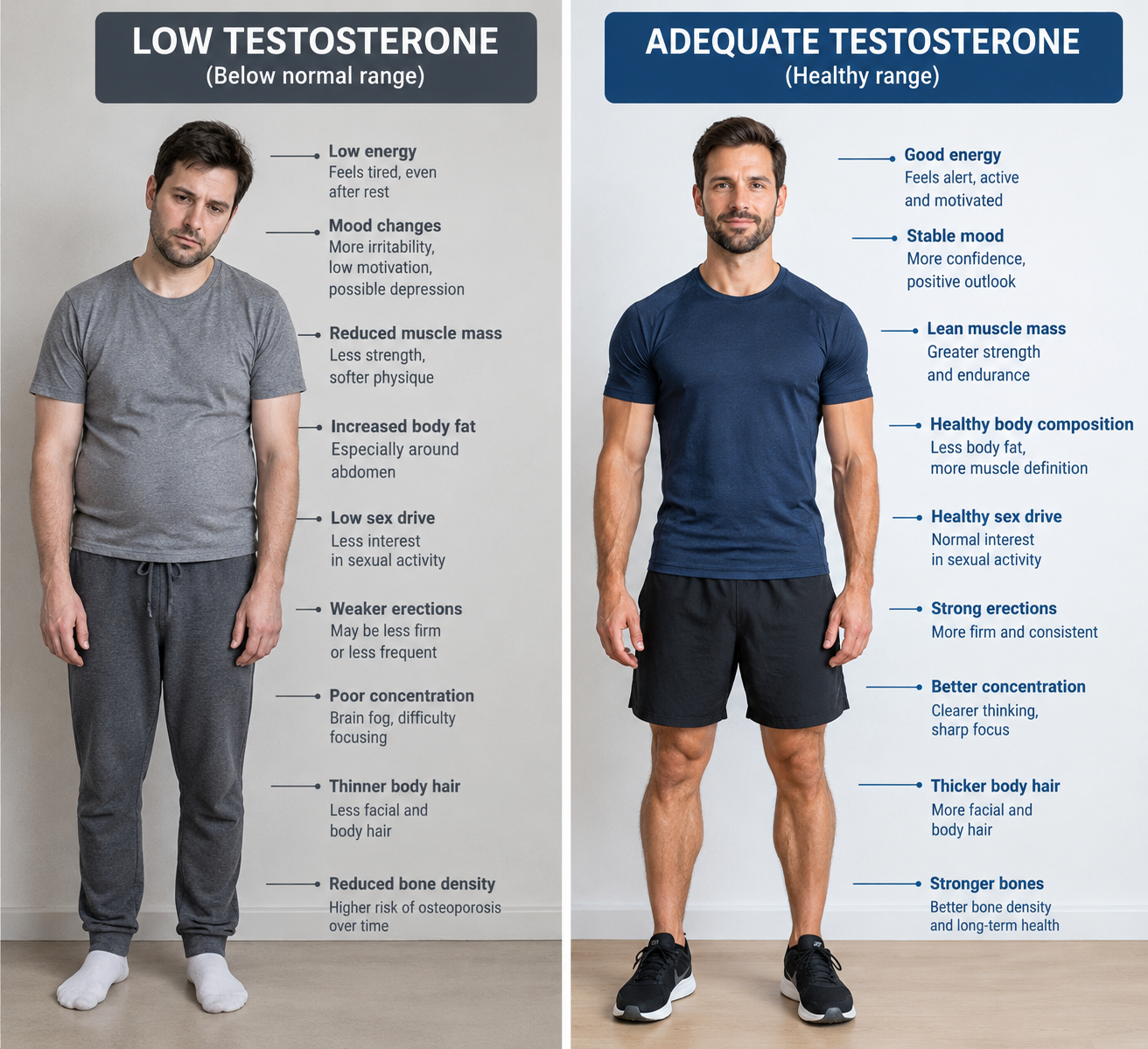
Symptoms associated with low testosterone can be subtle and may develop gradually.
You may notice:
Reduced sex drive or libido
Changes in erectile function or fewer spontaneous erections
Persistent fatigue or reduced energy
Loss of strength or difficulty maintaining muscle mass
Reduced exercise performance or recovery
Increased body fat or changes in body composition
Reduced motivation or drive
Difficulty concentrating or “brain fog”
Irritability or changes in mood
Reduced sense of wellbeing
Fertility concerns
These symptoms are not specific to testosterone deficiency and may have other causes. Stress, poor sleep, certain medications, medical conditions, weight changes and other hormonal abnormalities can produce similar symptoms.
That is why a proper medical assessment is important before considering treatment.
When Should You Consider a Testosterone Assessment?
A testosterone assessment may be worthwhile if you are experiencing persistent symptoms that could be related to low testosterone, particularly when they are beginning to affect your quality of life, relationships, sexual health, exercise capacity or overall wellbeing.
Having symptoms does not automatically mean that testosterone treatment is needed.
The first step is determining whether your symptoms and bloodwork are consistent with testosterone deficiency and whether there may be other contributing or reversible factors.
Your Initial Testosterone Consultation
Your assessment is designed to look at the whole picture — not simply a testosterone number on a blood test.
1. Detailed Medical Assessment
We will review your symptoms and how they are affecting your day-to-day life, as well as your:
Medical history
Medications and supplements
Sexual health
Energy and mood
Sleep
Exercise and body composition
Cardiovascular and metabolic health
Family history
Fertility plans
Previous testosterone testing, if available
2. Brief Health Check
A focused health assessment will help identify factors that may contribute to your symptoms and determine whether testosterone treatment can be considered safely.
3. Comprehensive Bloodwork
Appropriate bloodwork will be arranged to assess your testosterone levels and investigate other potential contributors to your symptoms.
Because testosterone levels naturally fluctuate, diagnosis may require more than one appropriately timed testosterone measurement.
4. Your Personalized Plan
Once your history, examination and bloodwork have been reviewed, we will discuss the results together.
If testosterone deficiency is confirmed and treatment is appropriate, I will develop an individualized plan aimed at restoring testosterone to an appropriate physiological range while improving the symptoms that matter to you.
Depending on your individual situation, this may include:
Testosterone replacement therapy
Lifestyle and metabolic strategies that may improve testosterone levels
Addressing sleep, weight, medications or other contributing factors
Further investigation where another hormonal or medical issue is suspected
Treatment is individualized rather than based on a one-size-fits-all protocol.
Ongoing Monitoring
Starting testosterone is only one part of treatment.
Regular follow-up is important to assess:
How your symptoms are responding
Testosterone levels
Appropriate blood parameters
Potential side effects
Whether treatment or dosing needs adjustment
Your ongoing goals and overall health
The aim is to use the lowest appropriate treatment needed to achieve a meaningful clinical benefit while monitoring your health and safety.
Fertility and Testosterone
If you are planning to have children, please mention this during your consultation. Traditional testosterone replacement therapy can reduce sperm production and may affect fertility. Your future fertility goals are therefore an important part of deciding whether TRT is appropriate and which management strategy should be considered.
Book a Testosterone Assessment:
Testosterone replacement therapy requires an appropriate medical assessment and is not suitable for everyone. Treatment recommendations are made on an individual basis following review of your symptoms, medical history and laboratory investigations.
Consultation Fees:
Is Testosterone Therapy Right for You?
The purpose of a testosterone consultation is not to assume that you need testosterone.
It is to determine why you are experiencing your symptoms, whether testosterone deficiency is contributing, and what can be done about it.
If testosterone replacement therapy is appropriate, treatment will be prescribed and monitored medically with an individualized plan focused on your symptoms, your health and your long-term wellbeing.
Initial Testosterone Assessment — $150
Includes a detailed medical history, focused health assessment, review or arrangement of appropriate bloodwork, and development of an individualized management plan.
Follow-Up Reviews — $100
Includes review of your response to treatment, bloodwork, safety monitoring and adjustment of your treatment plan when required.